How to Choose the Best Wooden Doors for Your Home?
Choosing the right wooden doors is more than matching a stain to your flooring. A door must manage privacy, security, airflow, moisture, noise, and daily impact. It also shapes the first physical impression of a room. A heavy oak door feels grounded under the hand, while a lighter pine door can create a warmer, less formal atmosphere.
Market research supports careful selection. Grand View Research’s 2024 analysis of the global wood products market identifies construction and renovation as major demand drivers. The Freedonia Group’s residential doors research also highlights replacement activity, design upgrades, durability, and energy performance as important buying factors. These findings suggest that appearance alone is no longer enough. However, market reports often describe broad consumer trends. They cannot decide whether a specific door will survive a humid bathroom or a busy family hallway.
Technical guidance matters more at that point. The U.S. Department of Energy recommends properly weatherstripped exterior doors to reduce drafts and improve comfort. The Forest Stewardship Council promotes responsibly sourced timber through certified supply chains. Look for clear information about wood species, moisture resistance, core construction, finishes, hardware, and certification. Solid wood is attractive, but it may expand or contract with seasonal humidity. Engineered wood can offer better dimensional stability, although quality varies between manufacturers.
There is no perfect choice. A costly door can still perform poorly after incorrect installation. This guide explains how to compare materials, construction, climate suitability, maintenance needs, and long-term value before choosing wooden doors for your home.
Understanding Wooden Door Types and Their Best Uses
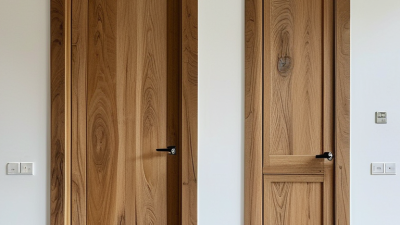
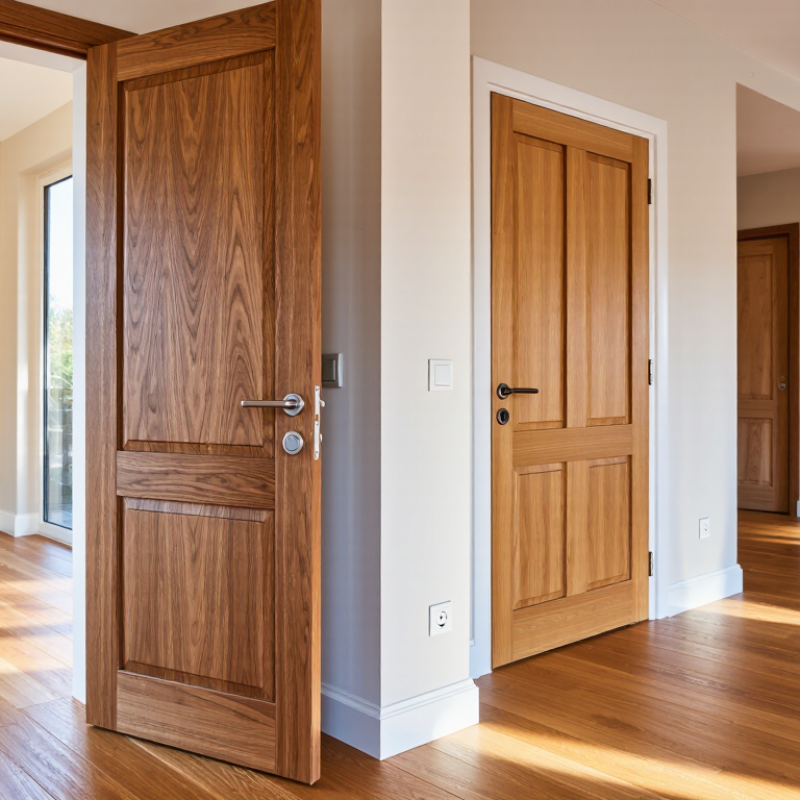
Wooden doors differ in structure, stability, appearance, and suitable location. Solid wood doors offer rich grain, strong impact resistance, and a substantial feel under the hand. They work well for bedrooms, studies, and main entrances with proper weather protection. However, solid timber can expand during humid months. Leave enough clearance around the frame.
Engineered wood doors use layered timber fibers, which helps reduce warping. They suit busy hallways, kitchens, and apartments with changing indoor temperatures. Veneered doors provide a natural wood surface over a stable core. They create an elegant appearance without the weight or cost of thick solid timber. Hollow-core doors are lighter and more affordable, but they provide less sound insulation and impact resistance. I have found them practical for wardrobes and low-traffic rooms, though they can feel less durable than expected.
Tips:
Match the door type to its environment. Choose moisture-resistant construction for bathrooms, but avoid constant water exposure. For an exterior door, check the core, seals, finish, and drainage details. Measure the opening twice, including wall thickness and floor clearance. Ask an experienced installer to inspect uneven walls before ordering. A beautiful door may still perform poorly when fitted against a damp frame. Check that hinges, locks, and handles support the door’s weight. Small hardware decisions affect daily comfort more than many people expect.
Evaluating Wood Species, Grain, and Construction Quality
Choosing a wooden door begins with the species, not the finish. Oak offers visible pores and strong wear resistance, while maple provides a smoother, quieter grain. The USDA Forest Products Laboratory’s Wood Handbook reports Janka hardness values near 1,290 lbf for red oak and 1,450 lbf for hard maple. These figures help predict dent resistance, but they do not guarantee durability. A dense wood can still fail when moisture moves through an unstable panel.
Study the grain direction across the stiles, rails, and panels. Straight, continuous grain usually looks calmer and reduces visual inconsistencies. Rift-sawn grain can improve stability, although it may cost more. The Wood Handbook notes that wood moisture content changes with surrounding humidity. Therefore, a door installed in a damp hallway needs careful acclimatization. I once judged a sample only by its color. That was a mistake.
Construction quality deserves closer inspection.
Look for properly joined corners, balanced panels, sealed end grain, and a solid or engineered core suited to the door’s location. WDMA I.S.1A-21 sets performance and manufacturing requirements for architectural wood flush doors, including construction consistency and material quality. Ask whether the door was tested for warping, bond strength, and moisture exposure. Small gaps matter. A 2-millimeter joint may become obvious after seasonal movement. A flawless showroom sample can still hide weak edge sealing. Compare the technical specification, not just the surface.
Matching Door Style, Size, and Finish to Your Home
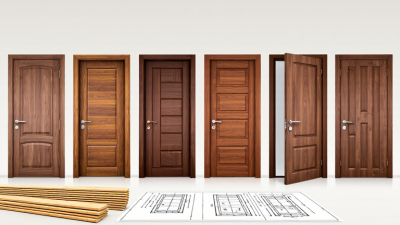
Choosing a wooden door starts with proportion, not decoration. Measure the existing frame, wall thickness, swing direction, and available clearance. A beautiful door can feel awkward when its panels look too small. For a traditional façade, raised panels and warm oak suit brick or stone. For modern homes, flat planks and clear grain create cleaner lines. Keep the style consistent with nearby windows and flooring.
Size also affects comfort and energy performance. The U.S. Department of Energy reports that air leakage can represent 5–30% of heating and cooling energy use. Therefore, request accurate weatherstripping, a tight threshold, and professional installation. Check the door’s clear opening, especially for moving furniture or improving accessibility. The 2024 Cost vs. Value Report recorded a 188.1% cost recoup for steel entry-door replacement, but this figure does not guarantee the same return for wood. It does show how installation and curb appeal influence perceived value. Finish selection needs equal care. Exterior doors require UV-resistant stain or paint, sealed edges, and scheduled maintenance. Dark finishes may absorb more heat and reveal fading sooner. A small sample board is safer than trusting a showroom light. I once underestimated how differently oak appeared beside cool gray walls. That mistake is easy to repeat. Choose the finish outdoors, in daylight, after viewing it beside the actual façade.
How to Choose the Best Wooden Doors for Your Home?
Match the door style, size, and finish to the room’s function. The chart below shows common nominal residential interior door slab widths in the United States.
Style: Use paneled or glazed doors where character and natural light matter; choose simple flush doors for clean, modern interiors.
Size: Wider doors improve accessibility and furniture movement. A 36-inch door is commonly selected for primary rooms, while 24- to 30-inch doors are often used for closets and compact spaces.
Finish: Clear or natural finishes highlight wood grain, painted finishes coordinate easily with trim, and durable polyurethane or varnish helps protect doors in busy areas.
Dimensions shown are common nominal interior door slab widths. Actual availability, rough-opening requirements, and accessibility clearances vary by location and installation method.
Comparing Energy Efficiency, Security, and Maintenance Needs
Choosing the best wooden door begins with your local weather, not its appearance. A dense wood core can reduce heat loss, especially when paired with a tight frame and quality weatherstripping. Check the door’s U-value and ask for tested performance data. Glass panels may brighten a hallway, but they can weaken insulation if poorly sealed. During a renovation, I once chose an attractive door with a loose threshold. Cold air entered beneath it every winter. That mistake changed how I judge doors.
Security depends on the complete system. A strong door needs a reinforced frame, dependable hinges, and a high-quality lock. The strike plate should connect firmly with the wall structure, not only thin trim. Laminated or reinforced glass can reduce breakage risks near the lock. Still, no wooden door is completely secure. A dramatic design may create hidden weak points, so ask an experienced installer to inspect the full assembly.
Maintenance needs vary with sunlight, rain, and humidity. Inspect the finish every spring for peeling, cracks, or dark moisture marks. Wipe spills quickly, and keep sprinklers away from the entrance. Reapply an exterior finish when the surface loses its sheen. Small gaps can often be sealed early, before swelling damages the frame. I have underestimated maintenance before. A neglected lower edge can absorb water and become difficult to repair. Local building requirements and professional installation advice should guide the final choice.
Setting a Budget and Selecting a Reliable Door Supplier
Choosing a wooden door begins with a realistic budget, not a showroom finish. Include the slab, frame, hinges, lockset, delivery, installation, staining, and possible wall repairs. A cheap door can become expensive after trimming and fitting. My first budget was too optimistic.
The NAHB 2024 Cost vs. Value Report gives a useful benchmark: a replacement steel entry door averaged about $2,355 nationally and recovered approximately 188% at resale. This is not a promise for wooden doors. Local labor, wood species, and opening conditions can change the result sharply. Treat the figure as a comparison point.
Ask at least three suppliers for itemized quotations. Require the wood species, construction method, finish system, delivery date, installation responsibility, and warranty in writing. A dependable supplier should explain moisture protection, seasonal movement, and maintenance without hiding behind vague claims. Request physical samples, recent project references, and measured moisture information for exterior doors. Check the threshold, weatherstripping, and drainage details closely. Small gaps matter.
If the door includes glass, review its energy specifications separately. ENERGY STAR reports that windows account for roughly 25%–30% of residential heating and cooling energy use, so poorly selected glazing can weaken an otherwise solid door. I would also question unusually short lead times. Sometimes they signal limited customization, not efficiency.