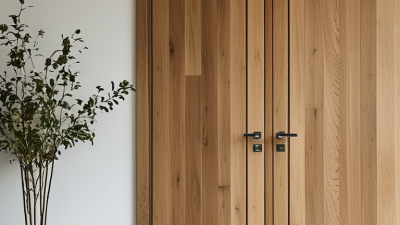
Choosing solid oak internal doors is not just a style decision. It affects room character, daily use, and how well a door performs as indoor conditions change. Oak’s visible grain and warm colour can bring depth to a hallway, but a beautiful sample does not guarantee the right door for every opening.
Material behaviour deserves equal attention. The USDA Forest Products Laboratory’s Wood Handbook reports that, at 70°F and 50% relative humidity, wood’s equilibrium moisture content is about 9.2%. That figure is a reference point, not a promise for every home. Samuel L. Zelinka, a wood scientist and contributor to the handbook, describes wood as “a hygroscopic material.” In practical terms, oak responds to moisture in the air, so stable indoor conditions and correct installation matter.
Details make the choice. Compare solid oak construction with oak veneer, check the door’s thickness and finish, and measure each opening before ordering. Consider whether the grain should blend with flooring or stand out against painted walls. Check the frame, hinges, and handle too. Small mismatches show.
This guide will help you weigh appearance, construction, sizing, maintenance, and value when choosing solid oak internal doors. A useful reminder: solid wood may move slightly as humidity changes. That is not necessarily a defect, though it can be inconvenient. Look beyond the product photo, ask suppliers for clear specifications, and choose a door that suits both your rooms and your expectations.
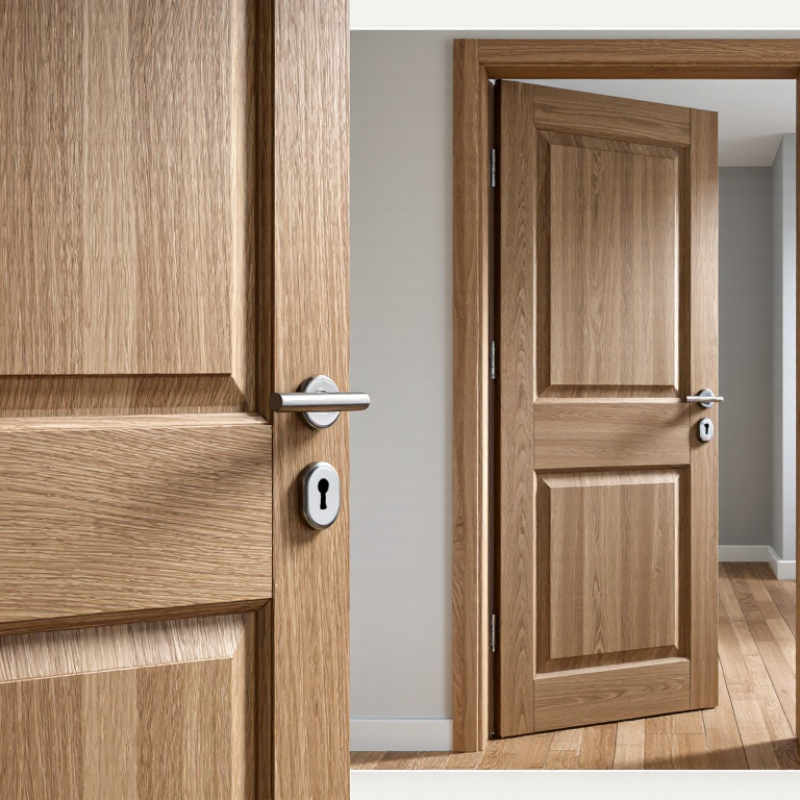
Before choosing a solid oak internal door, decide what the room needs from it. A bedroom may call for privacy and reduced noise, while a hallway door may mainly separate spaces. For a bathroom, check that the chosen finish suits humid conditions and that the lock allows safe access. Small details matter. A visible gap beneath the door can weaken both privacy and sound control.
If the opening requires an FD30 door, do not assume that solid oak construction provides fire protection. FD30 refers to a tested fire-resistance performance of 30 minutes, and the frame, seals, hinges, latch and installation can all affect the result. Check the product documentation and confirm that the complete door set meets the requirements for your project. Ask a competent installer to verify the opening and fitting details.
Check the paperwork. I would check twice, especially when an existing frame is being reused. A heavy door can feel reassuring, but weight alone proves very little.
The 1981 × 762 mm door leaf is a familiar UK size, but it is not the size of the opening you should measure. BS 4787-1:1980 documents traditional UK door and doorset dimensions; treat it as a reference for nominal sizing, not proof that your frame will accept a particular leaf. Measure the existing leaf if available, then check the structural opening at the top, middle and bottom. Record the smallest width and height. Walls are rarely perfectly square.
Allow for the frame, fitting clearance and floor finish before ordering a solid oak door. A 762 mm leaf needs more room than 762 mm across the rough opening. Check the frame rebate and hinge positions, too. Small differences matter. If the opening is uneven, a fitter can assess whether trimming is practical; the door maker’s trimming limits are essential, since cutting too much may expose the core or weaken the construction. Oak is heavy, so inspect hinge condition and fixing points rather than assuming the old hardware is suitable. Measure twice. Note the units. A few millimetres can turn a neat fit into a frustrating adjustment.
Choosing an oak-looking door starts with understanding what sits beneath the surface. A solid-oak door is made from oak throughout, though it may use joined sections rather than one continuous piece. Its grain and color can vary naturally. It is usually heavy, so check that the frame and hinges can support it. Wood also responds to humidity, which can cause seasonal movement.
An oak-veneered door has a thin layer of real oak over a core, often made from engineered timber. You still see and touch oak, but the surface layer is limited. Small scratches may be harder to repair than on solid wood. Look closely at the veneer edges and ask how thick the layer is. Details matter.
Engineered-core doors can also have oak veneer, but their core is designed for stability and may help reduce warping. Construction varies, so ask what the core contains rather than relying on the label alone. For a busy hallway, a stable core may be practical. For a room where natural variation and future refinishing matter, solid oak may suit better. Neither choice is perfect. I would compare samples in the room’s actual light, then check the care instructions before deciding.
Oak grade affects appearance more than basic suitability. Clear grades usually have fewer knots and a more even grain, while character grades show knots, mineral streaks, and colour shifts. Neither is automatically better. Ask to inspect the actual door or a representative sample, since oak varies from board to board. A tiny sample can be misleading.
Moisture content matters because solid oak responds to changes in indoor humidity. Check that the door has been dried for interior use, and ask what moisture range is suitable for your home’s climate. A moisture meter can help, but readings depend on the meter and how they are taken. Let the door adjust to the room before fitting; rushing this step may invite sticking or gaps later. A few days may not be enough in every home.
Decide on the finish before ordering. An unfinished door offers flexibility, but needs suitable protection on both faces and all edges, including the top and bottom. A factory finish can save time, though its sheen and colour may look different under your hallway lighting. Confirm that any chosen oil, varnish, or lacquer is compatible with oak and the door’s existing coating. It is easy to focus too much on grain. Fit and finish details often matter just as much.
| Selection factor | What to check | Practical guidance | Good choice when… |
|---|---|---|---|
| Oak grade and appearance | Ask for the supplier’s written grading description. Inspect a sample for colour variation, knots, grain pattern, and filled features. | Terms such as “select,” “prime,” and “character” are not used consistently across suppliers. Compare actual samples and confirm what the grade permits. | The permitted natural features match the room’s style and your expectations for door-to-door variation. |
| Door construction | Confirm whether the door is solid oak throughout, an oak-faced engineered construction, or a combination. Check the manufacturer’s construction details. | These constructions are different. Engineered components can improve dimensional stability, but an oak veneer or facing is not the same as solid oak throughout. | The construction is clearly specified and appropriate for the intended use, appearance, and budget. |
| Indoor moisture content | Request the door’s moisture-content information and the supplier’s recommended installation conditions. Check that the doors have been stored in a dry, ventilated space. | Around 8–12% is a common reference range for timber in many heated interiors, but the appropriate value depends on the building’s climate and conditions. Follow the door maker’s specification; a calibrated meter suitable for oak can help with checks. | The timber is reasonably acclimatised to the building and the supplier’s moisture guidance is compatible with the room’s expected conditions. |
| Acclimatisation and storage | Check delivery and storage instructions, and whether the room is dry with heating and ventilation operating normally. | Store doors flat, supported, and protected from damp and direct heat. Allow the period specified by the manufacturer before fitting; avoid leaving them in a wet or unfinished building. | The doors can be stored under suitable indoor conditions before installation and finishing. |
| Finish type and colour | Choose a finish intended for interior timber and compatible with oak. Test it on an offcut or concealed sample to check colour and sheen. | Clear finishes can deepen or warm oak’s colour; stains change its appearance. Follow the finish maker’s preparation, application, drying, and maintenance instructions. | The sample gives the desired appearance and the finish is suitable for the expected level of handling and cleaning. |
| Coverage of faces and edges | Confirm the finishing instructions for both faces, all edges, and any trimmed areas, including the top and bottom edges. | Coating exposed surfaces helps reduce uneven moisture exchange, but no finish can eliminate the natural movement of solid wood. Refinish any cut or planed area as directed. | A complete finishing plan is available before fitting, especially if the door will need trimming. |
| Trimming and fitting | Check the manufacturer’s maximum trimming allowance and the permitted locations for cutting or hardware. | Do not assume every solid oak door can be trimmed by the same amount. Cutting too far may expose joints or weaken the construction; reseal altered surfaces as instructed. | The door dimensions suit the opening, or the required adjustment is within the stated allowance. |
Note: Timber naturally responds to changes in humidity. Always follow the door manufacturer’s installation and finishing instructions for the specific product.
A solid oak door can look reassuringly substantial, but timber alone does not prove fire performance. Ask for fire-test evidence and confirm it covers the exact door construction, thickness, glazing, seals, and frame arrangement you plan to use. A certificate for a similar-looking model may not apply. Compare its stated limits with the opening and intended use. Details matter.
Choose hardware for the door’s actual dimensions and weight, not a generic catalogue sketch. Measure the leaf thickness, hinge positions, latch backset, and handle fixing centres before ordering. Heavy oak can strain undersized hinges; a lock case may also clash with a rail or panel. Dry-fit the hardware where practical. It saves awkward drilling. If a measurement seems uncertain, check it again.
Installation clearances need equal care. Let the door acclimatise in the room, stored flat and supported, before trimming or hanging; changing moisture levels can shift solid timber slightly. For a fire door, follow the tested assembly instructions for gaps, seals, and compatible hardware. Use a feeler gauge around the leaf rather than judging by eye, especially at the head and latch side. Floors are rarely perfectly level, and a neat-looking gap can still bind after carpet is fitted. Check the swing, latch engagement, and clearance again once the floor finish is in place.
Verify fire-test evidence, hardware fit and installation clearances.
These are commonly cited UK fire-door checking references: about 3 mm at the head and sides, and up to 8 mm at the bottom. They are not universal limits. Always follow the door’s fire-test evidence and certified installation instructions; smoke-control requirements may call for smaller gaps. Confirm that hinges, locks and other hardware are suitable for the specified door assembly.