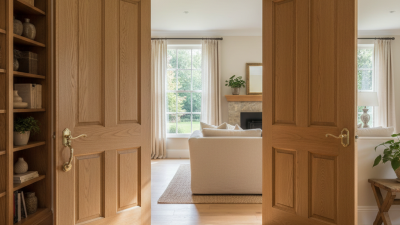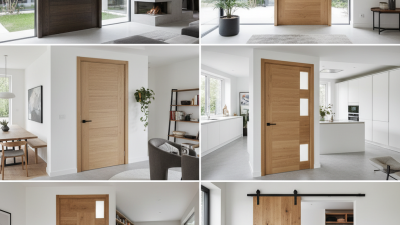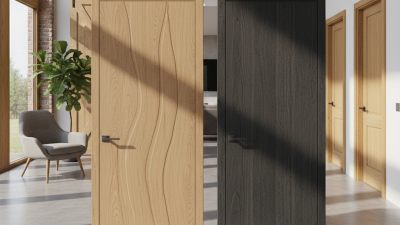
Choosing solid oak internal doors in 2026 involves more than selecting an attractive timber pattern. A well-made door should suit your home’s structure, daily routines, and long-term maintenance plans. Oak offers strength, visible grain, and a warm appearance that can improve hallways, bedrooms, and living spaces. However, quality varies considerably between manufacturers.
From practical fitting experience, I recommend checking the door’s construction before admiring its finish. Ask whether it is truly solid oak or an engineered core with oak faces. Examine the grain, joints, thickness, and moisture content. A heavy door may feel reassuring, but weight alone does not prove durability. Reliable suppliers should explain timber sourcing, finishing methods, tolerances, and warranty conditions clearly. Their technical information should be specific, not vague marketing language.
Your home’s conditions matter too. Measure each opening carefully, including the frame, floor clearance, and hinge positions. Consider sound reduction, privacy, glazing, and whether a fire-rated door is required by local building rules. Finishes also deserve attention. Clear oil highlights natural grain, while paint offers a more consistent appearance. Both can age well, but neither is maintenance-free.
Small details matter.
In 2026, responsible buyers should also question sustainability claims. Look for traceable timber and credible certification, then verify the documentation where possible. This guide compares styles, construction, performance, and costs without treating every oak door as equal. Some recommendations may not suit every property. That is the point: the best choice depends on honest measurements, realistic expectations, and careful supplier research.
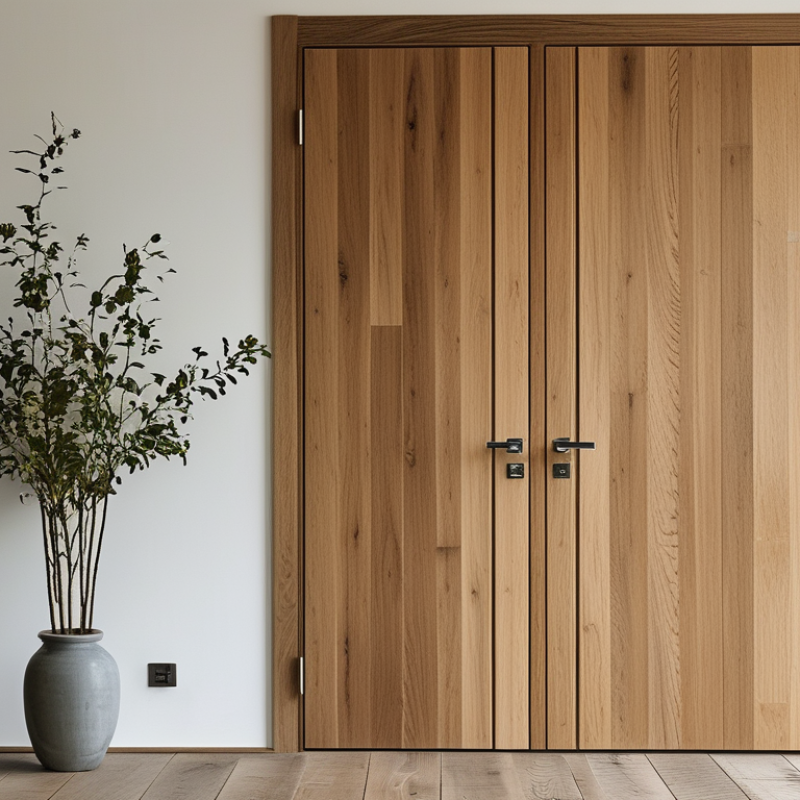
Choosing a solid oak internal door in 2026 starts with evidence, not a glossy surface.
EN 942 provides a structured way to discuss timber quality in joinery. It addresses visible features such as knots, resin pockets, grain deviation, and other natural defects. For hardwood joinery, its J-classes indicate permitted visual characteristics.
Ask which EN 942 class applies, and request its written acceptance criteria. Grades are not interchangeable. A higher appearance class usually permits fewer or smaller defects, but exact limits still matter.
Do not treat EN 942 as a moisture guarantee. Oak should usually arrive and be installed around 8–12% moisture content for heated interiors. Use a calibrated moisture meter, checking several areas rather than one convenient edge. Record readings before fitting. That small record can help distinguish manufacturing problems from later building conditions.
Excess moisture may cause swelling, tight clearances, or joint movement. Over-dry timber can shrink, open joints, and reveal unfinished edges.
Allow the door to acclimatise in its final room, away from radiators, wet plaster, and direct sunlight. Here is the uncomfortable detail: 8–12% is a target range, not a promise of permanent stability. Seasonal humidity still moves oak.
A common site mistake is measuring only the frame, not the door leaf. Check the leaf, edges, and concealed faces where possible.
Also confirm construction, acclimatisation instructions, and acceptable movement tolerances in writing.
Beautiful grain suggests character, but it does not prove quality. Documentation and measured moisture content provide stronger confidence.
How to Choose Solid Oak Internal Doors in 2026?
Construction type matters more than appearance. Solid oak boards offer strong impact resistance and a rich, continuous grain. However, they respond noticeably to indoor humidity. The USDA Forest Products Laboratory’s Wood Handbook reports that oak’s tangential shrinkage is roughly twice its radial shrinkage. A wide solid board can therefore cup or split when fitted in a dry, heated room. Laminated oak uses bonded strips with alternating grain directions. This reduces movement and can improve consistency. The finish may look slightly less natural. That trade-off is easy to underestimate.
Three-layer oak panels use a stable core between oak layers. They often balance strength, weight, and dimensional control. The European Panel Federation’s annual industry reports identify multilayer wood panels as established engineered products, not experimental substitutes. Still, quality depends on moisture control, adhesive performance, and accurate pressing. I would not judge the door by thickness alone. A dense door can still twist if its layers are poorly balanced.
Tips: Check the manufacturer’s moisture range and request a cross-section drawing. Use a moisture meter before installation; indoor timber commonly performs best near 8–12% moisture content, depending on climate. Leave the door acclimating inside for several days. Inspect the bottom edge, where sealing is often weaker. Solid boards suit traditional rooms and careful maintenance. Laminated oak suits busy homes. Three-layer panels deserve serious consideration, although their grain may feel less perfectly authentic. unerquicklich
Choosing a solid oak internal door in 2026 requires more than admiring its grain. Thickness affects weight, stability, acoustics, and heat transfer. A 44 mm leaf suits many homes, while 54 mm provides greater mass and a deeper sealing surface. It also demands stronger hinges and a carefully aligned frame.
Do not confuse thickness with thermal performance. The UK Government’s Approved Document L, 2021 edition, gives 1.4 W/m²K as a reference U-value for doors in relevant replacement work. That figure applies to the complete door set, not only the oak leaf. EN ISO 10077-1 requires calculation of the frame, edge seals, air cavities, and hardware. Ask for a documented whole-door U-value. A thick oak slab may still perform poorly around its edges.
In practice, inspect the threshold first. A two-millimetre gap can undermine an expensive door. Check the frame for continuous seals, and ask whether the quoted value was calculated or tested. Oak’s conductivity is commonly reported near 0.13–0.18 W/mK, depending on moisture and density. Yet real homes are less tidy than laboratory models. Humidity changes can cause movement. I would avoid choosing 54 mm only for status. A stable 44 mm leaf with accurate seals may outperform a badly fitted heavier door. That is the uncomfortable part.
When choosing solid oak internal doors in 2026, fire safety should guide the design, not follow it. EN 1634-1 tests complete doorsets, including the frame, hinges, seals, glazing, and hardware. A solid oak leaf alone does not prove fire resistance. Look for a tested 30-minute or 60-minute rating, often shown as E30 or E60. The “E” refers to integrity, meaning flames and hot gases must not pass through the doorset during testing.
Ask for clear certification from the manufacturer or supplier. Check that the certificate matches the exact door construction, thickness, frame type, and installation method. A 60-minute doorset may require heavier materials, special intumescent seals, and approved hinges. Small gaps can matter. An attractive oak door can still fail if it is trimmed too much or fitted with unsuitable ironmongery. This is where many buyers, including experienced ones, make assumptions.
Tips: Measure the opening carefully. Confirm the wall construction. Use trained installers for fire-rated doors. Never replace certified components casually. Check that seals sit continuously around the frame, with no cuts or paint covering them. Ask whether glazing has its own fire test evidence. Also consider daily use; a beautiful door that closes poorly needs attention. I would not trust a vague “fire door” description without test details. Certification can be confusing, and product information is sometimes incomplete. That uncertainty deserves a written answer before ordering.
Choosing solid oak internal doors in 2026 means checking more than grain and colour. Ask the seller for current FSC documentation, not just a logo on a leaflet. The certificate should identify the chain of custody and match the supplied product. If details seem vague, pause. Responsible sourcing connects timber with controlled forest management and traceable processing. Keep the invoice, specification, and certificate together. This simple habit supports reliable purchasing decisions.
Durability begins with construction, not thickness alone. Inspect the stile-and-rail joints, door edges, hinges, and surface finish. Oak responds to humidity, so allow the doors to acclimatise indoors before installation. Bathrooms, kitchens, and poorly ventilated rooms need particular care. During one renovation, I saw a beautiful oak door swell after rushed fitting. The mistake was not the timber. It was ignoring the room conditions. That experience still influences my checks.
Calculate the whole-life cost before choosing the cheapest quote. Include delivery, fitting, handles, finishing, adjustments, cleaning, and possible repairs. A well-finished door may need less frequent refinishing, but no finish lasts forever. Check whether damaged edges can be repaired locally. Also ask about replacement parts and warranty terms. A heavier door can improve the feel and reduce some sound transfer, yet it may require stronger hinges and frames. Measure twice. Mistakes become expensive very quickly.
| Evaluation dimension | Practical data point | Recommended benchmark for purchase | How to verify before ordering | Effect on whole-life value |
|---|---|---|---|---|
| FSC sourcing | The Forest Stewardship Council system distinguishes certified material claims and chain-of-custody documentation. | Require a current FSC claim for the door or its solid-oak components, not only a general sustainability statement. | Request the certificate or licence reference, check its validity in the public FSC certificate database, and confirm that the product scope covers doors or solid timber. | Reduces sourcing uncertainty and supports traceable procurement; it should not be treated as proof of superior door performance. |
| Timber species and density | Oak density commonly falls around 600–750 kg/m³ at approximately 12% moisture content, depending on species and grade. | Ask for the exact oak species, timber grade, moisture basis, and construction specification. | Check the technical datasheet and confirm that “solid oak” does not mean only a thin oak veneer over another core. | Higher-density timber can improve impact resistance but increases door weight, hinge loading, and installation requirements. |
| Door construction | Solid oak doors may be made from wide boards, edge-glued components, or engineered oak sections with solid-oak faces. | Prefer a documented construction method with moisture-control and movement tolerances. | Request a cross-section drawing, board-joint details, permissible dimensional movement, and written installation instructions. | Stable construction lowers the risk of bowing, splitting, sticking, and premature replacement. |
| Moisture content | Interior joinery timber is commonly supplied near the building’s indoor equilibrium range; approximately 8–12% moisture content is a useful planning benchmark for many heated interiors. | The door should be acclimatised indoors and protected from rapid humidity changes before fitting. | Ask for the measured moisture range at dispatch and follow the manufacturer’s acclimatisation period. | Correct moisture management helps prevent seasonal gaps, swelling, twisting, and costly remedial work. |
| Thickness and weight | Common internal door thicknesses are approximately 35–44 mm; a dense solid-oak door can weigh substantially more than a hollow-core equivalent. | Confirm finished thickness, calculated door weight, hinge quantity, frame capacity, and handling requirements. | Compare the technical weight per door with the load rating of hinges, screws, frame, and wall fixings. | Adequate hardware prevents sagging and reduces future adjustment or replacement costs. |
| Surface finish | Unfinished oak requires sealing; pre-finished doors usually reduce site labour but may need careful edge treatment after trimming. | Use a compatible finish on all faces, edges, and cut-outs, with extra attention to the bottom edge. | Confirm finish type, number of coats, maintenance interval, repair method, and whether trimming voids the warranty. | A sound finish limits moisture exchange, staining, UV discolouration, and refinishing frequency. |
| Durability and repairability | Oak is a hard, wear-resistant hardwood, but performance still depends on grade, joints, finish, hardware, and indoor humidity. | Choose a repairable finish and a door design that permits local sanding, filling, and refinishing. | Inspect sample edges, joints, knots, splits, machining quality, and the written defect-replacement policy. | Repairable solid timber can extend service life and defer full replacement. |
| Acoustic performance | Sound reduction depends on mass, seals, frame, threshold, gaps, and installation—not timber species alone. | For bedrooms or offices, specify a tested sound-reduction rating where meaningful acoustic control is required. | Request test evidence for the complete doorset, including seals and frame, rather than relying on “solid oak” wording. | Correct specification avoids paying for mass that does not deliver the required installed acoustic result. |
| Indicative purchase cost | For planning only, a standard-sized solid-oak internal door may range from approximately £250–£900 before specialist glazing, hardware, delivery, and installation. | Compare like-for-like quotations using the same size, thickness, finish, glazing, hardware, and delivery terms. | Obtain an itemised quotation and identify exclusions such as frame alterations, trimming, painting, handles, hinges, and disposal. | The lowest initial price may become expensive if it requires early refinishing, hardware upgrades, or replacement. |
| Whole-life cost model | Whole-life cost = purchase + delivery + installation + maintenance + repairs − residual or reuse value. | Calculate a 15-year comparison rather than comparing purchase price alone. | Use the same assumptions for every option and record finish renewal, adjustment, repair, and replacement allowances. | A higher upfront cost can be justified when service life, repairability, and maintenance requirements are demonstrably better. |
| Example 15-year budget | Illustrative scenario: £550 door + £180 installation + £25 annual maintenance + £120 repair allowance. | Illustrative undiscounted total: approximately £1,225 over 15 years, excluding hardware upgrades and inflation. | Replace the assumptions with local labour rates, actual finish intervals, delivery charges, and expected repair frequency. | This calculation prevents a premium material from being judged only by its initial invoice price. |
| Environmental end-of-life options | Solid timber can often be reused, repaired, or mechanically recycled when coatings, glazing, and hardware are removed appropriately. | Avoid unnecessary composite layers where reuse and future repair are priorities. | Ask about material composition, adhesive content, finish removal, and local reuse or recycling routes. | Longer use and easier reuse can reduce replacement demand and disposal impacts. |
Data note: Cost figures are indicative 2026 planning ranges in GBP, not fixed quotations. Timber density, moisture content, performance, and installation requirements vary by species, grade, construction, climate, and local building practice. Always verify the current technical documentation and applicable local standards before purchase.