How to Choose the Best Roller Belt for Your Needs?
Choosing the right Roller Belt can greatly enhance your efficiency. Whether for a warehouse or manufacturing line, the correct belt matters. A suitable Roller Belt simplifies the movement of goods, saving time and effort.
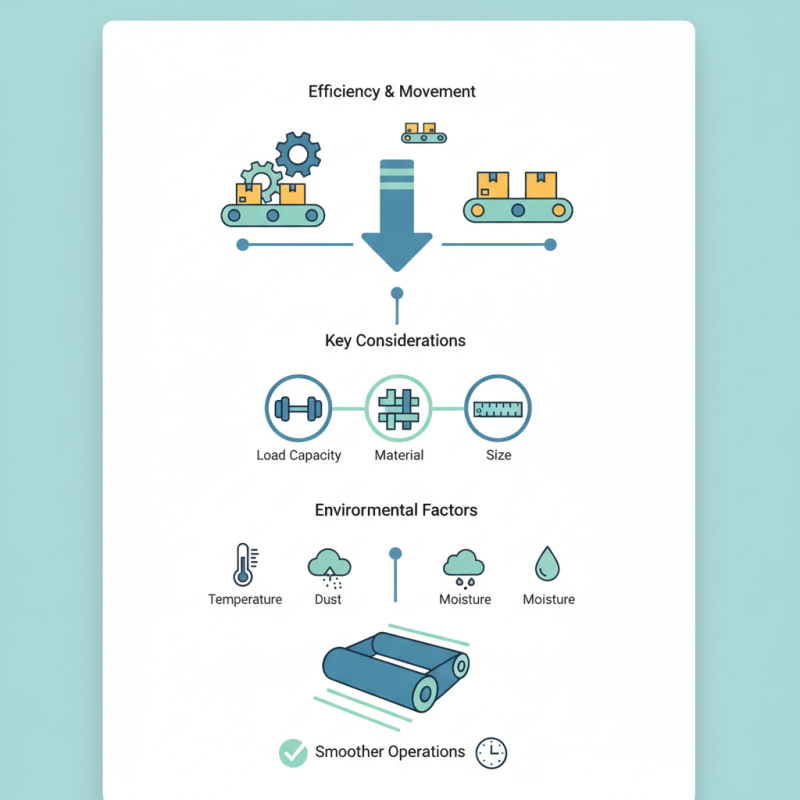
Understanding your specific needs is crucial. Consider factors like load capacity, material, and size. Each application requires a different approach. A good Roller Belt should withstand wear while providing reliability. Different jobs demand tailored solutions.
Reflect on the options available. Many brands offer various features. It can be overwhelming, and mistakes can be costly. Assess your environment: temperature, dust, and moisture affect performance. A well-chosen Roller Belt contributes to smoother operations.
Understanding Roller Belt Types and Their Applications
When it comes to roller belts, understanding their types and applications is vital. Roller belts come in various formats, each tailored for specific uses. For instance, flat belts are commonly used in manufacturing settings, providing a surface for smooth movement. According to industry reports, over 30% of production facilities prefer flat roller belts due to their efficiency in transferring power.
In contrast, modular belts are gaining popularity in the food processing sector. These belts consist of interlocking plastic components, allowing for easy maintenance and cleaning. Research indicates that modular belts can enhance operational efficiency by up to 25%. They are particularly beneficial in environments where hygiene is critical. However, their initial cost may be higher, requiring careful consideration.
Each roller belt type has strengths and weaknesses. Selecting the wrong belt can result in increased downtime and operational inefficiencies. For example, if a business chooses a heavy-duty belt for light-duty applications, it may lead to premature wear. Consulting with industry experts can help clarify which belt will best suit specific operations, considering factors like load requirements and environmental conditions.
Key Specifications to Consider When Choosing a Roller Belt
When selecting a roller belt, it’s essential to focus on key specifications that align with your needs. The width of the belt plays a crucial role. It affects load capacity and stability during transportation. A wider belt can handle heavier loads but may require more space. In contrast, a narrower belt may fit better in tight environments but could limit your load.
Material composition is another vital factor. Common materials include PVC, polyurethane, and leather. Each has unique durability and flexibility characteristics. PVC offers excellent wear resistance, while leather can provide more adaptability. Consider the environment where the belt will be used. Will it be exposed to moisture or extreme temperatures? This impacts material selection greatly.
You should also examine the roller mechanism. Different designs, like grooved or flat rollers, affect performance. Grooved rollers can handle uneven surfaces, which might be necessary for certain applications. Flat rollers usually provide smooth operation but may not be suitable for inclined surfaces. Assess how ease of maintenance fits into your decision. Some designs allow for simple cleaning and replacement, while others may require specialized tools. Balancing these factors will lead to a more informed choice.
How to Choose the Best Roller Belt for Your Needs? - Key Specifications to Consider When Choosing a Roller Belt
| Specification | Description | Importance |
| Belt Width | The width of the roller belt, affecting load capacity and compatibility. | High |
| Material | Type of material used in the belt, influencing durability and flexibility. | High |
| Load Capacity | Maximum weight the belt can safely carry. | Critical |
| Roller Diameter | Diameter of the rollers used, affecting the belt movement and friction. | Medium |
| Temperature Resistance | Ability of the belt to withstand temperature variations. | Medium |
| Adjustability | Features allowing the length of the belt to be modified. | Medium |
| Surface Texture | The texture of the belt surface, affecting grip and material handling. | Medium |
| Safety Features | Incorporation of features such as automatic shut-off or emergency brakes. | High |
Evaluating Material Durability and Performance of Roller Belts
When selecting a roller belt, material durability is crucial. Different materials offer distinct advantages and challenges. For instance, rubber belts are flexible and provide good grip but can wear out faster. In contrast, polyurethane belts are known for their strength and resistance to abrasives, making them a popular choice for heavy-duty applications.
Performance often hinges on how well a belt can withstand various conditions. Heat, moisture, and friction can degrade belt integrity over time. Regular inspections are vital to identify signs of wear and tear. Sometimes, you might find that a belt needs replacing sooner than expected. This can lead to unplanned downtime in operations.
Consider your specific needs, such as load capacity and speed requirements. A material suitable for one application may not work well in another. Understanding these nuances can aid in making an informed choice. You may even find that trial and error is necessary before landing on the perfect fit for your needs.
Sizing and Fit: How to Measure for the Right Roller Belt
Choosing the right roller belt starts with accurate sizing and fit. Measuring correctly ensures comfort and prevents injuries during use. Begin by using a flexible measuring tape. Wrap it around your waist where you typically wear your belt. Make sure it feels snug but not tight.
After obtaining your waist measurement, take note of it. It’s essential to consider whether you prefer a tighter or looser fit. Some users opt for a size up, especially if they plan to wear layers or use the belt for extended periods. Remember, a poorly fitting belt can lead to discomfort.
Try different adjustments while measuring. Doing so may highlight potential issues. It's not uncommon for users to discover discrepancies in their size. Each brand or style can vary in fit. Therefore, checking their specific sizing guides is crucial. Don't rush this step; taking time to measure properly is key to finding your ideal roller belt.
Comparing Cost vs. Quality in Roller Belt Selection
When selecting a roller belt, cost and quality are crucial. A lower-priced option may seem appealing, but it often compromises durability. Frequent replacements due to wear and tear can lead to higher expenses over time. Investing in a quality roller belt can save money and minimize disruptions in operations.
Consider the materials used in the roller belt. High-quality belts often feature stronger fabrics and reinforced seams. They may cost more upfront, but their longevity is a significant advantage. Evaluating the belt’s weight capacity is also vital. A belt suited for heavier loads usually performs better and lasts longer.
Evaluate the specific application for which the roller belt is needed. If the belt is used in a high-demand setting, quality should take precedence. It may require some trial and error to find the perfect fit. Understanding the balance between your budget and the level of quality needed is an ongoing process. A practical approach involves learning from past experiences. The most efficient choice is not always the cheapest one.
Roller Belt Cost vs. Quality Comparison