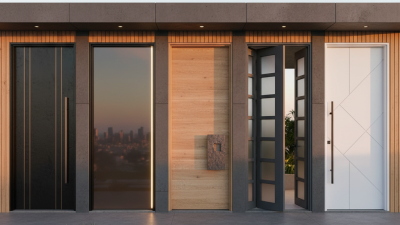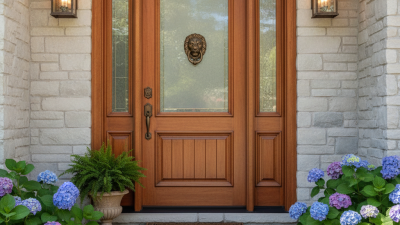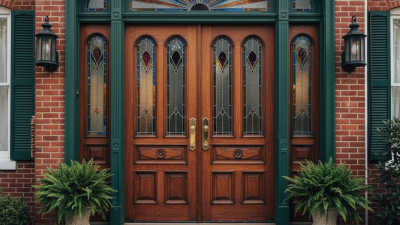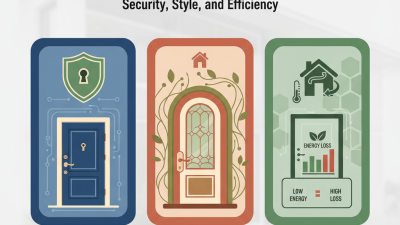
Choosing the best external doors for global buyers requires more than comparing colors, prices, and catalog photographs. A door that performs well in a dry coastal city may struggle in a humid tropical climate. Cold regions demand stronger thermal protection. Windy locations need tested air and water resistance. Buyers must also examine frame materials, threshold design, glazing, hinges, locks, maintenance needs, and installation quality.
Building-science expert Joseph Lstiburek often explains the principle this way: “A door is a hole in the wall, and every hole needs control.” That reminder matters. External doors must manage water, air movement, heat loss, sound, and daily impact. The best choice depends on the building, not only the product label.
Fiberglass doors can offer stable performance with limited maintenance. Steel doors provide strength, but exposed finishes may need careful protection. Timber doors create warmth and character, yet they require disciplined sealing and regular inspection. Aluminum systems suit many modern projects, although thermal breaks are essential in demanding climates. No material wins everywhere.
Details decide performance.
A poorly fitted threshold can undermine an expensive door. A beautiful panel cannot compensate for water entering around the frame. Global buyers should request test data, installation instructions, warranty terms, and local technical support. Regional standards also vary, so independent verification remains valuable.
There is no perfect universal answer. That is the uncomfortable part. Product selection can still go wrong when buyers trust appearance over evidence. A reliable decision balances climate, security, energy performance, design, budget, and long-term service.
What Makes an External Door Suitable for Global Buyers?
A suitable external door must perform across climates, not only look attractive in a showroom. The 2023 Global Status Report for Buildings and Construction states that buildings consume about 30% of global final energy. A poorly sealed entrance can increase drafts, moisture, and heating or cooling demand. Buyers should request tested U-values, air-permeability results, and water-tightness ratings. These figures matter more than decorative finishes.
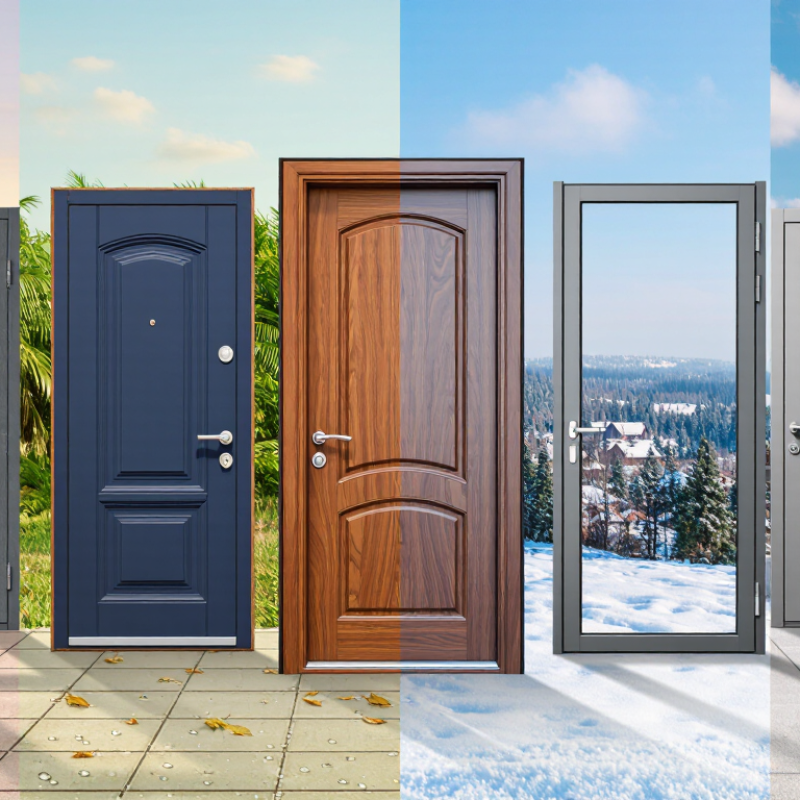
Climate changes the specification. A door for a humid coastal area needs corrosion-resistant hardware, stable panels, and reliable drainage. In cold regions, insulated cores and continuous seals help reduce heat loss. In hot climates, low solar absorption and shaded entrances can improve comfort. The U.S. Department of Energy notes that heat transfer through windows and doors can represent a significant share of household heating and cooling loads. Small gaps become expensive.
Security also requires evidence. Ask for test reports covering forced-entry resistance, hinge strength, lock performance, and impact safety. Standards such as EN 14351-1 and ISO 9972 can help buyers compare products, but certification alone does not guarantee correct installation. Local wall thickness, threshold height, wind exposure, and emergency access still matter. This part is often underestimated. A technically excellent door can fail after poor fitting, rushed sealing, or unsuitable transport. Global buyers should review maintenance instructions, replacement-part availability, warranty conditions, and verified project references before ordering.
Choosing an external door for a global project starts with climate, not appearance. In coastal regions, salt air attacks exposed metal hardware and weak finishes. Fiberglass doors usually resist moisture, swelling, and repeated temperature changes. They perform well in humid, rainy areas when the frame is properly sealed. However, cheaper fiberglass panels can feel light and show surface damage after impact. That trade-off is easy to miss online.
Steel offers strong security and stable dimensions in dry or cold climates. Its weakness is thermal bridging. Without an insulated core and thermal break, winter heat escapes quickly. In hot, sunny regions, dark steel can become painfully hot. Aluminum resists corrosion and needs little maintenance, but standard profiles conduct heat rapidly. Thermally improved aluminum performs better, though it usually costs more. Check the frame, threshold, hinges, and seals, not only the door slab.
Timber remains valuable where appearance, repairability, and insulation matter. In wet climates, it needs durable coatings and careful edge protection. Small unfinished cuts can absorb water like a sponge. uPVC suits many temperate and humid applications, but extreme sunlight may weaken poor formulations. I have seen doors fail because installers ignored local drainage and wind exposure. Material selection is only half the decision. Confirm tested air leakage, water resistance, wind-load performance, and replacement-part access. The best specification can still disappoint when installation details become an afterthought.
| Climate / Exposure | Recommended Door Materials | Typical Thermal Performance* | Moisture & Corrosion Resistance | Solar & Temperature Performance | Maintenance Requirement | Best Design Features |
|---|---|---|---|---|---|---|
| Cold and severe winter Low outdoor temperatures, snow and freeze–thaw cycles |
Insulated fiberglass or insulated steel; engineered timber with a high-performance finish | A well-insulated complete door assembly can commonly achieve approximately U-value 0.8–1.6 W/m²K; lower values indicate better insulation | Very good when the leaf, frame, threshold and weather seals are correctly detailed | Fiberglass and insulated steel remain dimensionally stable; timber requires protection against moisture absorption | Low for fiberglass and factory-finished steel; moderate for timber | Thermally broken frame, insulated core, multi-point locking, compression seals and a raised weather-resistant threshold |
| Hot and dry High daytime temperatures, strong sunlight and low humidity |
Fiberglass, insulated steel or aluminum with a thermal break; stable hardwood may also be suitable | Approximately U-value 1.0–2.0 W/m²K is achievable with an insulated leaf and thermally improved frame | Good; corrosion protection is still needed for exposed metal hardware and thresholds | Light-colored finishes reduce solar heat gain; UV-resistant coatings help limit fading and surface degradation | Low to moderate; inspect coatings, seals and moving hardware regularly | Low solar-absorption finish, insulated core, UV-stable coating and a shaded or recessed installation where possible |
| Hot and humid High humidity, heavy rain and frequent moisture exposure |
Fiberglass or corrosion-resistant aluminum with thermal separation; properly sealed engineered timber in protected locations | Approximately U-value 1.2–2.2 W/m²K, depending on glazing, frame and insulation level | Excellent for fiberglass and suitably finished aluminum; timber needs careful edge sealing and drainage | Use finishes rated for UV and high humidity; provide ventilation and drainage around the frame | Low for fiberglass; moderate for aluminum and timber depending on coating quality | Stainless or suitably protected hardware, continuous weather seals, sloped sill, drainage channels and sealed edges |
| Coastal and marine Salt spray, wind-driven rain and high humidity |
Fiberglass or marine-grade finished aluminum; corrosion-resistant steel only with a robust protective system | Approximately U-value 1.2–2.2 W/m²K for insulated assemblies | Very high priority: fiberglass has strong resistance; exposed metal requires compatible coatings, fasteners and drainage | Select UV-resistant finishes and avoid untreated steel, incompatible metals and water-trapping details | Moderate; wash exposed surfaces with fresh water and inspect coatings and hardware | Marine-suitable coating, corrosion-resistant fasteners, sealed joints, wind-rated hinges and reinforced locking points |
| Temperate and mixed seasons Moderate heating and cooling loads with variable rainfall |
Fiberglass, engineered timber, insulated steel or thermally broken aluminum | Approximately U-value 1.0–2.0 W/m²K is commonly practical for a high-quality insulated door | Good across all listed materials when drainage, flashing and perimeter seals are correctly installed | Choose a finish suitable for both UV exposure and seasonal dimensional movement | Low to moderate, depending on material and surface finish | Adjustable hinges, replaceable seals, insulated threshold and a finish compatible with local rainfall and sunlight |
| High wind and storm exposure Strong gusts, wind-driven rain and pressure changes |
Reinforced fiberglass or steel; engineered timber with structural reinforcement may be suitable | Thermal results depend on the complete assembly; insulated cores and continuous seals improve performance | Good when the frame is securely anchored and the sill is properly flashed | Select a tested door system rated for the project’s local wind pressure and exposure category | Low to moderate; inspect hinges, locks, seals and frame fixings after severe weather | Reinforced frame, multi-point lock, heavy-duty hinges, impact-resistant glazing and tested water/wind resistance |
| Security-focused urban applications High traffic, frequent use and increased security requirements |
Insulated steel or reinforced fiberglass; aluminum is suitable when the frame and locking system are adequately engineered | Approximately U-value 1.0–2.0 W/m²K for insulated systems | Good; select finishes according to indoor humidity and outdoor exposure | Stable finishes and insulated construction help reduce warping and condensation risks | Low to moderate; hardware may require periodic adjustment and lubrication | Multi-point locking, laminated security glazing where required, reinforced strike plates and durable hinges |
*Typical whole-door U-value ranges are indicative and vary with door thickness, core insulation, frame construction, glazing, threshold design and installation quality. Lower U-values generally indicate better thermal insulation. Always verify local building-code, wind-load, fire-safety and security requirements before specification.
For global buyers, an external door should be judged as part of the building envelope. The IEA’s 2023 Global Status Report says buildings consume about 30% of global final energy. It also links buildings to roughly 26% of energy-related emissions. These figures make thermal performance more than a marketing claim.
Compare the door’s U-factor, air-leakage rating, and water resistance. Lower U-values usually indicate better insulation. However, ratings vary between regions, so buyers should request certified test results. The U.S. Department of Energy notes that air leakage can represent 25–40% of heating and cooling energy use. Poor installation can weaken an excellent door. Security also requires evidence. EN 1627 resistance classes, multi-point locking tests, and impact-test records offer clearer comparisons than vague phrases like “high security.” For durability, check exposure ratings, corrosion testing, hinge-cycle results, and warranty terms. A heavy door is not automatically durable. I have seen specifications look impressive, yet drainage details were missing.
Tips: Ask for the complete performance certificate, not only a brochure. Confirm the test climate and installation method. Compare U-factor and air leakage together. Inspect threshold seals, frame joints, and drainage channels. For coastal projects, require corrosion testing suited to salt exposure. Choose laminated or impact-resistant glazing where security matters, but verify replacement availability locally. Buyers should also calculate delivered cost, because a cheaper door may need earlier adjustment or replacement. That uncomfortable possibility deserves attention.
External doors should match the building’s use, climate, and entrance traffic. A single hinged door suits many houses, especially when the opening is narrow. For wider façades, double doors create a stronger visual entrance and allow furniture to pass easily. Sliding doors work well for patios, retail spaces, and modern apartments. They save swing space, but their tracks need regular cleaning in dusty locations.
Commercial buildings often need wider openings, stronger hardware, and controlled access. A paired door configuration can manage busy movement better than one oversized leaf. Hotels and offices may benefit from glazed doors, which improve visibility and bring daylight into reception areas. However, excessive glass can increase heat gain, glare, and privacy concerns. Low-energy glazing and suitable shading deserve careful attention.
I have specified doors for coastal and high-humidity projects, where corrosion resistance mattered more than appearance. In colder regions, insulated cores, tight seals, and thermal breaks reduce uncomfortable drafts. Accessibility also affects the configuration. Clear opening width, threshold height, and opening force should be checked against local requirements. An outward-swinging door may improve emergency movement, but it can obstruct narrow walkways. My early recommendations were sometimes too generic. Door selection should follow measured site conditions, not just attractive drawings. A left-hand or right-hand swing can change furniture layouts, circulation, and safety. Small details matter.
For global buyers, an external door is not just a product; it is part of the building envelope. Supplier evaluation should begin before price negotiation. Ask for the factory address, legal registration, production capacity, and quality-control process. A polished catalog proves little. Request dated production photos, sample specifications, and references from similar climates. Reliable suppliers explain material grades, hardware options, warranty limits, and replacement procedures clearly. They should also disclose subcontracted processes instead of hiding them.
Standards need careful comparison because test names can look similar across markets. A door rated for air leakage may not offer strong water resistance. Ask which laboratory performed each test and whether the report matches the exact door model. Confirm test methods, sample sizes, and report dates. Thermal performance matters in cold regions, while drainage and ultraviolet resistance matter in hotter locations. I have seen buyers compare only U-values, then overlook weak thresholds and poor seals. That mistake is expensive.
Installation can decide whether a good door performs well. Before ordering, share accurate opening dimensions, wall details, exposure direction, and local weather conditions. The opening must be measured at several points, not only across the top. Check wall type, sill support, drainage paths, and fixing locations. Ask the supplier for an installation drawing with tolerances and approved sealants. A trained installer should photograph the frame, shims, fasteners, and final seals. Keep inspection records. Still, no checklist catches everything. Local craftsmanship and unexpected movement in the building may require adjustments during installation.
How Can Global Buyers Evaluate Suppliers, Standards, and Installation?
This illustrative procurement model assigns a 100-point evaluation weight to the factors most commonly verified in international door sourcing. Buyers should confirm applicable local requirements and request documented test results for standards such as EN 14351-1, ASTM E283, ASTM E330, and ASTM E331. The weighting is a practical decision framework, not a market-share survey.